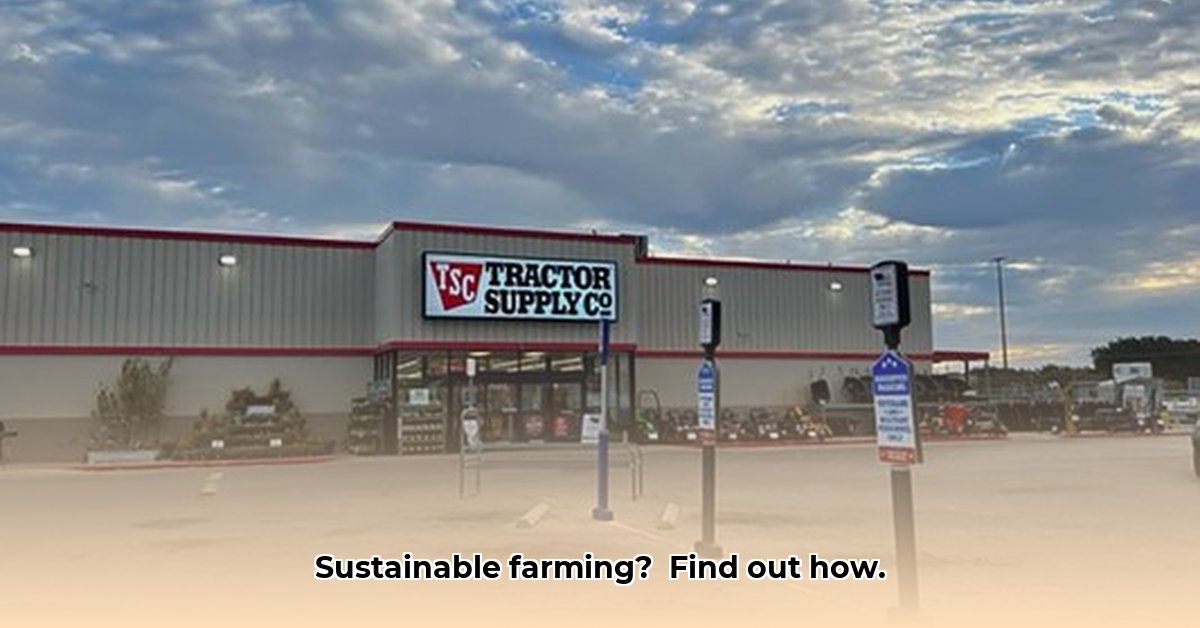
Tractor Supply's Product Offerings and Local Impact
Tractor Supply Company (TSC) in Bastrop, Louisiana, offers a wide array of products relevant to both conventional and sustainable agricultural practices. The store stocks items such as organic seeds, fertilizers, water management tools, and durable fencing materials. This readily available access to necessary supplies benefits the local farming community, potentially boosting agricultural productivity. However, a significant limitation is the lack of readily available quantitative data on sales of these specific products. While the TSC website lists product offerings, detailed sales figures and information concerning the scale of their impact on sustainable farming practices in Bastrop remain elusive. Further research is needed to assess the actual contribution of TSC’s product offerings to sustainable farming in the area. For similar stores in nearby areas, see this example.
Sustainability Assessment: Data Gaps and Transparency
A comprehensive analysis of TSC’s role in promoting sustainable agriculture in Bastrop is hampered by a lack of publicly available data. While the store sells products relevant to sustainable practices, crucial information regarding sustainability certifications for organic materials, sourcing practices, and the overall environmental impact of their supply chain is absent. This lack of transparency prevents a definitive assessment of their environmental footprint. This isn’t an accusation of unsustainable practices, but rather a call for improved data transparency. Greater disclosure from Tractor Supply concerning their sustainability initiatives is critical for a complete understanding of their role in the Bastrop agricultural community. How can we accurately evaluate their sustainability if key data points are unavailable?
Stakeholder Analysis: A Collaborative Effort
Sustainable agriculture in Bastrop requires a collaborative effort involving various stakeholders. Local farmers rely on TSC for essential supplies and resources. TSC's staff plays a crucial role in guiding customers towards suitable products and potentially offering advice on sustainable farming techniques. TSC's corporate decisions regarding sourcing, production, and overall environmental policies have a direct impact on the local environment. Finally, consumers exert influence through their purchasing choices, incentivizing sustainable practices when they select environmentally friendly goods. This complex ecosystem emphasizes the interconnectedness of responsibilities in promoting sustainable agriculture.
Recommendations for Future Research and Improvement
To gain a clearer picture of TSC’s contribution to sustainable agriculture and identify areas for improvement, several steps are necessary:
Comprehensive Data Collection: Conduct thorough surveys and interviews with local farmers and consumers to quantify the impact of TSC's product offerings on their sustainable agriculture practices. This would include assessing the adoption of sustainable practices and their efficacy.
Enhanced Transparency from TSC: Encourage TSC to publicly release data regarding their supply chain, product sourcing (including verification of organic labels), and detailed efforts towards reducing their overall environmental footprint. This includes providing sales data segmented by sustainability-related products.
Benchmarking: Compare TSC's sustainability practices with those of its competitors in the agricultural supply sector to identify best practices and areas for improvement. Are there demonstrably more sustainable competitors in the region?
Collaborative Partnerships: Facilitate partnerships between TSC, local farmers, and organizations focused on sustainable agriculture to foster knowledge sharing and resource optimization. This collaborative approach could lead to improved outcomes for all involved.
Conclusion: A Call for Transparency and Collaboration
This analysis reveals potential positive contributions from Tractor Supply Company to the sustainable agriculture efforts in Bastrop, Louisiana, but also highlights significant gaps in available data. The lack of transparency regarding TSC’s sustainability initiatives hinders a comprehensive assessment. The recommendations outlined above—focused on data collection, improved transparency from TSC, benchmarking, and collaborative partnerships—are crucial steps towards gaining a more accurate understanding of TSC’s full impact and fostering a more sustainable agricultural landscape in Bastrop. The call for greater transparency from TSC and proactive collaboration among stakeholders is paramount for ongoing progress.